Home › Guides › Lawn & Farm Equipment › Can farm equipment be welded?
Can Cracked Farm Equipment Be Welded? A Guide by Implement
From CanItBeWelded.com, run by Rick, a working welder at RickTheWelder. Published November 29, 2026. How we write and check guides.
Quick answer
- Weld and reinforce: implement frames, loader buckets, box blades, rotary cutter decks, gates, drawbar brackets, hitch masts and most fabricated steel.
- Replace: spring tines and shanks, mower and cutter blades, disc blades, PTO shafts and their guards, rated chain and hooks, and any rollover protective structure (ROPS).
- Cast parts such as gearbox housings and some brackets need the right method. Identify the metal first.
- Find the cause. Farm cracks are usually fatigue from vibration and hard use. Add a gusset or fishplate, not just a bead.
- Stick and flux-core are the usual processes in the field, because wind blows away shielding gas.
Why farm equipment cracks
Farm equipment lives a hard life: constant vibration, shock loads from rocks and stumps, overloading, rust from manure, fertilizer and weather, and long stretches of sitting before a rush of use. Most cracks are fatigue cracks that start at a weld toe, a bolt hole, a sharp corner or the end of a brace. That is good news, because fatigue cracks in mild steel frames weld well, as long as the repair also adds strength where the crack started.
Implement by implement
| Equipment | Usual answer | Guide |
|---|---|---|
| Loader bucket, cutting edge, ears | Weld, reinforce, hardface edges | Loader bucket |
| Skid steer quick attach plate | Weld and reinforce, replace worn pins | Quick attach plate |
| Box blade and scarifier frame | Weld frame, replace bent shanks and teeth | Box blade |
| Rotary cutter (bush hog) deck | Weld cracks, plate rusted areas | Rotary cutter deck |
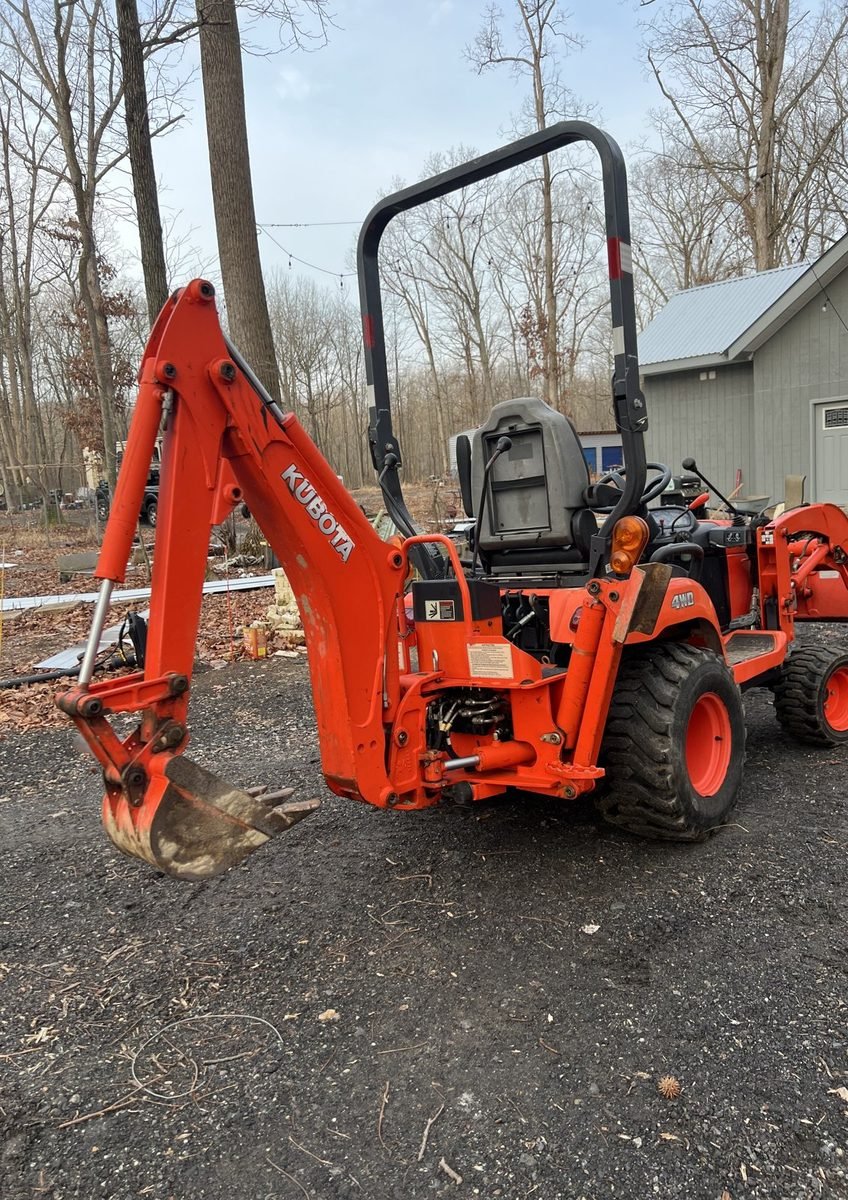
| Excavator and backhoe bucket | Weld, rebuild, hardface | Excavator bucket |
| Three-point hitch brackets, masts | Weld implement side, replace forged arms and pins | Three-point hitch |
| Bale spear frame | Weld frame, replace spears | Bale spear |
| Livestock gates and panels | Weld or sleeve, mind galvanizing | Livestock gates |
| Hydraulic cylinder mounts | Weld mounts, never the rod | Cylinder mount |
| Log splitter beam | Weld and reinforce if steel is sound | Log splitter |
| Snow plow frame and A-frame | Weld and reinforce | Snow plow |
| Wear edges, points, teeth | Hardface or replace | Hardfacing |
| Tractor ROPS | Do not weld; replace | ROPS |
Parts to replace, not weld
- Spring tines, cultivator shanks and harrow teeth: spring steel that cracks again beside a weld. Replace.
- Mower, cutter and disc blades: hardened and balanced. Replace. See lawn mower blade.
- PTO shafts and yokes: welding throws them out of balance and can hide cracks in a part spinning beside you. Replace damaged sections and keep guards in place.
- Rated chain, hooks and shackles: replace with new rated hardware. See what should never be welded.
- ROPS: tractor makers say not to weld, drill or modify them. See Can a ROPS be welded?
- Forged three-point lift arms and drawbars: usually heat treated. Replace if cracked.
How to make a farm weld last
- Clean it properly. Pressure wash, then grind to bright metal. Manure, grease and fertilizer cause porosity. See prep.
- Trace and stop the crack. Find both ends and drill a stop hole past each.
- Grind it out and weld full depth, using several passes on thick steel.
- Reinforce the stress point with a fishplate or gusset that has tapered or rounded ends.
- Fix the cause: worn pins and bushings, loose bolts, missing braces, overloading.
- Paint it so rust does not start a new crack.
Field repairs vs shop repairs
A mobile welder with an engine-drive machine can fix most cracked frames, buckets and brackets where the equipment sits, which matters during planting, haying and snow season. Heavy rebuilds, line boring of worn pin holes, and cast parts are easier in a shop. Our mobile welder cost guide covers how mobile work is usually priced.
Reading a crack before you weld it
Before grinding anything, look at the crack and its surroundings. A clean crack with no bending around it, starting at a weld toe or a hole, is usually fatigue: the part flexed many times at a stress point. A crack with bent or stretched metal around it is usually an overload: the part hit something or carried more than it was built for. Fatigue cracks call for a repair that spreads the load, such as a fishplate or gusset. Overload damage may also need straightening, and you should ask whether the part is simply too light for the work you are doing.
Clean the area and look closely at both ends of the crack. Many cracks are longer than they look under paint and dirt. Dye penetrant kits from welding suppliers make fine cracks easy to see. Drill a small hole just past each end of the crack before welding so it cannot keep running while you work.
A sample repair: cracked implement frame at a brace
- Park on level ground, lower the implement or block it securely, and disconnect the PTO shaft and hydraulics.
- Pressure wash or scrape off mud, manure and grease, then grind back to bright metal an inch or two around the crack.
- Find both ends of the crack and drill stop holes.
- Grind a V along the crack, about two thirds of the way through on thick steel, so the weld reaches the root. On plate thick enough to reach from both sides, gouge or grind the back side too.
- Weld the V in several passes, cleaning slag between passes if you are using stick or flux-core.
- Grind the face flush where a plate will sit, then add a fishplate or gusset that extends well past the crack. Taper or round its ends and avoid welding straight across the frame at the ends of the plate, which creates a new stress point.
- Prime and paint so the repair does not become the next rust spot.
For thick sections, read small welders on thick steel and when to preheat first.
Wear parts and rebuilding
Many farm parts do not crack so much as wear away: bucket edges, box blade cutting edges, ripper shanks, plow points and auger flighting. Bolt-on wear parts are meant to be replaced. Rebuilding worn base metal and protecting it with hard surfacing is covered in the hardfacing guide. Keep in mind that a bucket worn thin all over is often past the point where rebuilding makes sense.
Check whether your machine can handle thick implement steel in the small welder guide, and get settings from the Welding Settings Calculator.
🧰 Tools & parts for this job
The links in the strip at the top of this page are Amazon searches for the gear this job uses. They are paid links (Amazon Associate), not endorsements of a specific product. Links never change a verdict.
⚠️ Safety
- Lower implements to the ground or block them securely before working under them. Never rely on hydraulics alone.
- Relieve hydraulic pressure and shield hoses before welding nearby.
- Clean hay, chaff and grease out of the area. Barns and equipment full of dry material catch fire easily.
- Disconnect the battery before welding on tractors and equipment with electronics.
Common questions
Can cracked farm equipment be welded?
Most of it, yes. Fabricated steel frames, buckets, decks, brackets and gates weld well and should be reinforced at the crack. Spring tines, blades, PTO shafts, rated chain and ROPS should be replaced.
What welder is best for farm repairs?
Stick or self-shielded flux-core, because they work outdoors and on less-than-perfect metal. A 240 volt or engine-drive machine handles thick implement steel far better than a small 120 volt welder.
Why does my implement keep cracking in the same place?
Usually fatigue at a stress point. Welding the crack without adding a properly shaped reinforcement, or without fixing a worn pin or loose bolt, lets it crack again.
Can you weld a cultivator shank or spring tine?
Not reliably. They are spring steel that cracks again next to the weld. Replace them.
Should I drill stop holes before welding a crack?
Usually yes. A small hole just past each end of the crack keeps it from running further while you prepare and weld the repair.
Is a fishplate always needed?
Not always, but on cracks caused by fatigue or vibration a plate or gusset that spreads the load usually makes the repair last much longer than a bead alone.